Do I Have to Arbitrate?

You’ve likely heard the terms “arbitrate” or “arbitration” before.  Arbitration is when parties with a dispute (perhaps over a contract, labor issue, etc.,) agree to allow a neutral 3rd-party (or parties, perhaps a panel of arbitrators) to decide how the dispute should be resolved.  This decision is binding on the parties and usually cannot be appealed.  It’s not uncommon that a lot of contracts you sign (cell phone, car rental, pest control services, etc.,) have an arbitration clause in them.

Arbitration can be helpful because it is often a more cost-effective means of resolving a dispute, for reasons including that the rules of evidence are relaxed and the time required to present each side’s case in an arbitration is usually significantly less than that required for a presentation to a jury.

However, it can be limiting to the parties.  It means you are waiving your right to a trial in front of a judge or a jury.  It also means your tools for gathering evidence, including documents and depositions (a process called discovery) may be severely limited.  The reality of most arbitration clauses is that they can provide a significant benefit to a corporation, while limiting the consumer.  For example, T-Mobile has filed a motion to compel arbitration in a federal case pending in Maryland.  Plaintiffs in the case allege that T-Mobile is using the arbitration clause to prevent a class-action lawsuit.

Generally, courts give a lot of deference to arbitration clauses and if a party files a Motion to Compel Arbitration, the court may very well grant it.  Always review contracts closely and understand what rights you’re giving up when you sign.

Can a College Be Legally Responsible for What Its Students Say?

college

An Ohio jury awarded $11 million in compensatory damages to Gibson’s Bakery.  Gibson’s filed a lawsuit alleging defamation against Oberlin College.  Students of Oberlin had accused Gibson’s of being racist after a white employee chased down a black Oberlin student who had attempted to use a fake ID to purchase alcohol, and was suspected of stealing alcohol by the Gibson’s employee.  According to court records, the student did plead guilty to attempted theft.

Students at Oberlin accused Gibson’s of being racist, and petitioned Oberlin to cut its ties to the bakery, which was a supplier to its cafeterias.  The lawsuit accused Oberlin of supporting the students’ claims of racism.

Floyd Abrams, a First Amendment lawyer, was quoted as saying, “The notion that uninhibited student speech can lead to vast financial liability for the universities at which it occurs threatens both the viability of educational institutions and ultimately the free speech of their students.”

Oberlin is no stranger to moral outrage.  In 2015, students accused the campus dining department and Oberlin’s dining vendor, of cultural appropriation and insensitivity, criticizing what they saw as poor attempts at multicultural cooking.

The jury will reconvene this week to decide on punitive damages.

Is your Maryland Driver’s License REAL ID Compliant

Beginning October 1, 2020, every traveler using their driver’s license to travel, will be required by TSA present a REAL ID compliant driver’s license.

Maryland is requiring that anyone with a State-issued license or identification card present the “Core Four” documents at their local MVA location.  These documents are being used to the license holder’s identification and address.

Maryland’s website has useful links to confirm if your current license or ID is compliant, a portal to schedule an appointment to bring in documents and other useful information.  Maryland DL

Major Drug Distributor Charged In Connection With Opioid Sales

We are all aware that our Nation is facing a major opioid crisis.  According to statistics, opioid drug overdose deaths increased from 8,048 in 1999 to 47,600 in 2017.  Currently, approximately 130 Americans die daily from opioid overdoses.

On Tuesday, federal prosecutors revealed that Rochester Drug Cooperative (“Rochester”), the nation’s sixth largest drug distributor, and its former CEO, face federal criminal charges in connection to the Nation’s opioid crisis.  Rochester ships to pharmacies across the northeast United States.  The charges stem from allegations that Rochester did not report suspicious orders to the DEA.

While this is a novel approach in prosecution, the ripple effect is likely to be significant and may cause concern for drug distributors who have thus far only faced the possibility of civil penalties.

Can My Face Be Used Against Me?

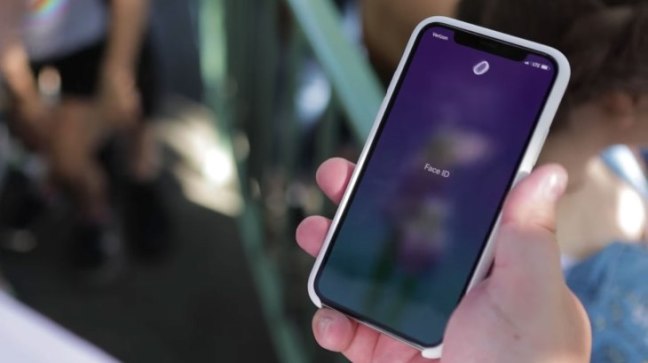
Many of you likely got a new smart phone over the holidays.  Almost all of us lock our smartphones for privacy reasons but did you know that how you unlock your phone can possibly impact whether or not law enforcement officers can compel you to unlock your phone?

The question of whether cops can force you to unlock your phone hinges on 5th Amendment protections against self-incrimination.  No one “shall be compelled in any criminal case to be a witness against” themselves.

Court are ruling that your fingerprints and face are not protected under the 5th Amendment and police officers can compel you to unlock your phone with your fingerprint or face.  However, as a general rule, you cannot be compelled to give your password.  This does not mean the government cannot access the information on your phone in other ways and there are exceptions to your 5th Amendment rights.  It should also be noted that the law on this is still developing in the courts and absent a ruling from the Supreme Court, the law may vary from state to state.

However, until there is a more definitive ruling by the courts, if you’re worried about privacy on your smartphone, put a strong, 6-digit passcode on it and forgo fingerprint or facial recognition on it.

Online Can Sometimes Mean Forever

We all know someone who has had an inaccurate rumor about them spread around.  Usually, we see this more often in social circles, but sometimes it’s more serious than that.

Take Dr. Ricardo Quarrie for example.  He is a Yale-educated cardiothoracic surgeon, who was accused of lying to a patient to cover up a mistake.  This patient’s attorney, Joel Faxon, told a television station in 2016 that Dr. Quarrie made false statements to his client in an attempt to cover up a mistake the hospital made.  Last month, Faxon wrote a retraction, stating that Dr. Quarrie did NOT lie to his client.

However, for Dr. Quarrie, the damage may be done. He states that employers have told him that while he is qualified, patients Google their doctors, and the articles from 2016 with the false accusations could still appear in the top of the search results.

Dr. Quarrie has indicated he will not file suit against Faxon and that part of that consideration was the written retraction Faxon provided.  However, that would have been an option available to him.  Instead, he is working with an online reputation company at nearly $900.00 per month to help him reclaim his reputation.

We recently had a client contact us regarding inaccurate information being posted on a Facebook forum.  We sent a cease and desist letter to the person posting the comments, explaining why they were inaccurate and cautioning the poster that our client would pursue legal action if anymore posts were made.  Thankfully, the matter was quickly resolved.

Before you post something online that may be critical of a person or business, make sure your information is accurate.  If you have any doubt, don’t post it. Being sued for defamation is expensive and unpleasant.  If you’ve had inaccurate or libelous information posted about you, here are some steps you can take before going down the road of contacting an attorney.

Important Changes to Car Insurance in Maryland

One area that we often touch on in our blog articles is auto insurance.  In January of this year we discussed the topic of how much insurance coverage you should think about covering on your liability policy.

Another component of insurance that we haven’t spoken about is uninsured or underinsured motorist coverage (“UM or UIM”).  Everyone is required to carry it in Maryland and as a default, your UM/UIM coverage limits mirrors that of your liability limits.  So, if you carry $100,000.00 in liability coverage, you also have $100,000.00 in UM/UIM coverage.  This means if someone who has no insurance, or limits under $100,000.00 causes injury to you or your passengers in your car, you can recover up to the limits of your UM/UIM policy.  So, for example, if the at-fault driver has a $30,000.00 policy and your damages exceed that, you can pursue a claim under your UIM policy for up to $100,000.00.  It is important to note that you do not get to “stack” the two and get $130,000.00.  Your recovery is capped at your UM/UIM policy limits and you can recover the difference between the at-fault party’s liability policy and your UM/UIM policy from your insurance company.  Which, in this example is $70,000.00 (100,000 – 30,000).

In Maryland, these UM/UIM limits have been capped at your policy limits, no matter how many vehicles you have insured.  So, using the same example above, even if you have 3 vehicles under that policy, you are capped at $100,000.00 cannot stack the policies on each insured vehicle for a total of $300,000.00.  Some states allow this and it is a huge benefit to individuals injured by someone else who carries no or very little insurance.  The difference in have $100,000.00 in possible recovery versus $300,000.00 can be very important if you’re dealing with serious injuries.

Beginning July 1, 2018 in Maryland, you can purchase Enhanced Underinsured Motorist (“EUIM”) coverage on all NEW automobile policies issued in Maryland. You may be able to also add this coverage on existing Maryland automobile, but this option will vary depending on your insurance company.

We strongly encourage you to contact your insurance agent to see if this coverage is available to you under your existing policy and if you are purchasing a new policy of insurance, you should look into EUIM coverage.


Jury Awards $4.00 in Wrongful Death Case

Last week, a federal jury in Florida awarded Greg Hill, Jr.’s family $4.00 in their claims against a St. Lucie County Sheriff’s deputy.

On January 14, 2014, St. Lucie County Sheriff’s Deputy Christopher Newman and his partner, Deputy Edward Lopez, were investigating a complaint for loud music.

Deputies got no response at the front door of the house, so they knocked on the garage door.  The Sheriff’s department alleges that as the garage door opened, the deputies saw Hill with a handgun down at his side.  When they ordered Hill to drop his gun, the deputies allege that he pointed the gun at the deputies at the same time as he pulled the garage door closed.  Deputy Newman then shot Hill through the garage door, killing him.

A jury awarded Hill’s family $4.00.  The evidence at trial showed that Hill’s blood alcohol level was 0.4, or 5 times the legal limit for operating a motor vehicle.  Because of this, the jury found that Hill was 99% responsible for his death and the award was reduced to $0.04.

Florida uses what is known as pure comparative negligence.  This means that whatever amount a plaintiff was negligent, their recovery will be limited by that amount.  So, in HIll’s case because the jury found he was 99% negligent, the award was reduced by 99%.

The attorney for Hill’s family indicated he will be requesting a new trial and if that is denied, he’ll file an appeal.