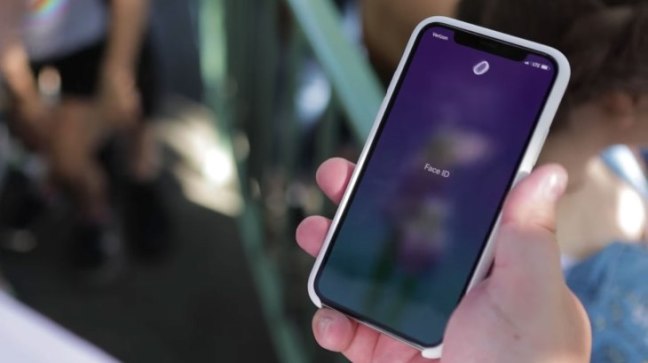
Can My Face Be Used Against Me?

Many of you likely got a new smart phone over the holidays.  Almost all of us lock our smartphones for privacy reasons but did you know that how you unlock your phone can possibly impact whether or not law enforcement officers can compel you to unlock your phone?

The question of whether cops can force you to unlock your phone hinges on 5th Amendment protections against self-incrimination.  No one “shall be compelled in any criminal case to be a witness against” themselves.

Court are ruling that your fingerprints and face are not protected under the 5th Amendment and police officers can compel you to unlock your phone with your fingerprint or face.  However, as a general rule, you cannot be compelled to give your password.  This does not mean the government cannot access the information on your phone in other ways and there are exceptions to your 5th Amendment rights.  It should also be noted that the law on this is still developing in the courts and absent a ruling from the Supreme Court, the law may vary from state to state.

However, until there is a more definitive ruling by the courts, if you’re worried about privacy on your smartphone, put a strong, 6-digit passcode on it and forgo fingerprint or facial recognition on it.

Online Can Sometimes Mean Forever

We all know someone who has had an inaccurate rumor about them spread around.  Usually, we see this more often in social circles, but sometimes it’s more serious than that.

Take Dr. Ricardo Quarrie for example.  He is a Yale-educated cardiothoracic surgeon, who was accused of lying to a patient to cover up a mistake.  This patient’s attorney, Joel Faxon, told a television station in 2016 that Dr. Quarrie made false statements to his client in an attempt to cover up a mistake the hospital made.  Last month, Faxon wrote a retraction, stating that Dr. Quarrie did NOT lie to his client.

However, for Dr. Quarrie, the damage may be done. He states that employers have told him that while he is qualified, patients Google their doctors, and the articles from 2016 with the false accusations could still appear in the top of the search results.

Dr. Quarrie has indicated he will not file suit against Faxon and that part of that consideration was the written retraction Faxon provided.  However, that would have been an option available to him.  Instead, he is working with an online reputation company at nearly $900.00 per month to help him reclaim his reputation.

We recently had a client contact us regarding inaccurate information being posted on a Facebook forum.  We sent a cease and desist letter to the person posting the comments, explaining why they were inaccurate and cautioning the poster that our client would pursue legal action if anymore posts were made.  Thankfully, the matter was quickly resolved.

Before you post something online that may be critical of a person or business, make sure your information is accurate.  If you have any doubt, don’t post it. Being sued for defamation is expensive and unpleasant.  If you’ve had inaccurate or libelous information posted about you, here are some steps you can take before going down the road of contacting an attorney.

Important Changes to Car Insurance in Maryland

One area that we often touch on in our blog articles is auto insurance.  In January of this year we discussed the topic of how much insurance coverage you should think about covering on your liability policy.

Another component of insurance that we haven’t spoken about is uninsured or underinsured motorist coverage (“UM or UIM”).  Everyone is required to carry it in Maryland and as a default, your UM/UIM coverage limits mirrors that of your liability limits.  So, if you carry $100,000.00 in liability coverage, you also have $100,000.00 in UM/UIM coverage.  This means if someone who has no insurance, or limits under $100,000.00 causes injury to you or your passengers in your car, you can recover up to the limits of your UM/UIM policy.  So, for example, if the at-fault driver has a $30,000.00 policy and your damages exceed that, you can pursue a claim under your UIM policy for up to $100,000.00.  It is important to note that you do not get to “stack” the two and get $130,000.00.  Your recovery is capped at your UM/UIM policy limits and you can recover the difference between the at-fault party’s liability policy and your UM/UIM policy from your insurance company.  Which, in this example is $70,000.00 (100,000 – 30,000).

In Maryland, these UM/UIM limits have been capped at your policy limits, no matter how many vehicles you have insured.  So, using the same example above, even if you have 3 vehicles under that policy, you are capped at $100,000.00 cannot stack the policies on each insured vehicle for a total of $300,000.00.  Some states allow this and it is a huge benefit to individuals injured by someone else who carries no or very little insurance.  The difference in have $100,000.00 in possible recovery versus $300,000.00 can be very important if you’re dealing with serious injuries.

Beginning July 1, 2018 in Maryland, you can purchase Enhanced Underinsured Motorist (“EUIM”) coverage on all NEW automobile policies issued in Maryland. You may be able to also add this coverage on existing Maryland automobile, but this option will vary depending on your insurance company.

We strongly encourage you to contact your insurance agent to see if this coverage is available to you under your existing policy and if you are purchasing a new policy of insurance, you should look into EUIM coverage.


Jury Awards $4.00 in Wrongful Death Case

Last week, a federal jury in Florida awarded Greg Hill, Jr.’s family $4.00 in their claims against a St. Lucie County Sheriff’s deputy.

On January 14, 2014, St. Lucie County Sheriff’s Deputy Christopher Newman and his partner, Deputy Edward Lopez, were investigating a complaint for loud music.

Deputies got no response at the front door of the house, so they knocked on the garage door.  The Sheriff’s department alleges that as the garage door opened, the deputies saw Hill with a handgun down at his side.  When they ordered Hill to drop his gun, the deputies allege that he pointed the gun at the deputies at the same time as he pulled the garage door closed.  Deputy Newman then shot Hill through the garage door, killing him.

A jury awarded Hill’s family $4.00.  The evidence at trial showed that Hill’s blood alcohol level was 0.4, or 5 times the legal limit for operating a motor vehicle.  Because of this, the jury found that Hill was 99% responsible for his death and the award was reduced to $0.04.

Florida uses what is known as pure comparative negligence.  This means that whatever amount a plaintiff was negligent, their recovery will be limited by that amount.  So, in HIll’s case because the jury found he was 99% negligent, the award was reduced by 99%.

The attorney for Hill’s family indicated he will be requesting a new trial and if that is denied, he’ll file an appeal.

When Simple Becomes Complicated

Currently, car accident cases center on determining human error – which driver was responsible for the accident.  The evolving world of car technology is going to change the future of how some car accident cases are litigated.

Self-driving cars, such as Tesla, are being touted as the future of cars.  However, there have been accidents involving these cars.  As recently as March 23, 2018, a Tesla Model  X SUV, with the Autopilot feature engaged, slammed into a concrete highway divider and caught fire, killing the driver.

When a car accident cases goes to court now, generally the judge or jury listens to testimony from each driver and based upon whose testimony they found to be more credible, they make a determination of who is at fault.  Occasionally, experts such as accident reconstructionists will offer testimony to aid the judge or jury, but usually just the drivers and/or witnesses who saw the accident will testify.

With more and more self-driving cars and cars with technology such as auto-braking, we may see some cases move from the a determination of driver error to a product liability case where the manufacturer of the vehicle will be a defendant as well.  This will also require expert testimony if these cases go to trial.  A judge or jury will have to review the evidence of competing experts in order to make their determination on liability.  This change will possibly create an economic “trickle down” affect wherein the increased cost to vehicle manufacturers for insurance and the cost of litigation may be passed on to the consumer with higher vehicle prices.

Additionally, on average, most car accident cases settle without going to court because insurance companies, through their own investigations may determine that its own driver(s) were at fault, and a settlement will occur, which allows the injured party to be compensated fairly quickly.  However, with a product liability case, you could be talking about years before the case is resolved or adjudicated.

Technology generally makes our lives more convenient, but you always have to consider the law of unintended consequences.

How Much Car Insurance Coverage is Enough?

In December of 2016, we wrote about the various types of car insurance.  Today, we are focusing on why it’s important to make sure you have enough insurance.

The amount of your policy limits under your liability insurance is the maximum amount of money your insurance company will pay on your behalf if someone files a claim against you for personal injury.  This can be a claim that never goes to suit or it can be a lawsuit that has been filed.

Maryland requires you to carry liability insurance of at least $30,000.00 per person and $60,000.00 per incident ($30,000/$60,000).  Your options for liability insurance can range from the minimum, up to $250,000/500,000.  These limits can vary depending on the insurance carrier.  The per person limits are the most that any single person can recover from the accident and the per incident amount is the most your policy will pay out in total.  So, if an accident injures 4 people and you have policy limits of $250,000/$500,000, the total amount of money that can be paid out is $500,000.00, but no matter how serious any single person’s injuries are, they cannot recover more than $250,000.00 from your policy.

So, how much is enough?  Even relatively minor accidents where the injured party only receives conservative treatment can involve thousands of dollars in medical bills. The law allows an injured party to recover all of their economic damages, (usually medical bills and lost wages).  Additionally, they can recover non-economic damages too (pain and suffering).  A policy with limits of $30,000/$60,000 can be exhausted very quickly.

What happens if you find out after a claim has been filed against you, that you don’t have enough insurance?  You will not be able to purchase a policy that will retroactively apply.  Assume you have a policy with limits of $30,000/$60,000, the case goes to trial and a verdict is returned in favor of the injured party for $50,000.00.  How is the extra $20,000.00 paid?  There are a couple of possibilities.  If the injured party has enough underinsured motorist coverage, their policy will pay it.  However, their insurance company has the right to sue you to recover any money they pay to their insured.  Another possibility is that the injured party can enforce the excess verdict against you personally.  They can garnish your wages, attach a lien on your property and utilize any number of procedural tools to enforce the judgment.  This may also force you into filing for bankruptcy.

Your policy limits can also impact the amount of coverage available to you and your family if you are injured by someone who is uninsured or underinsured.  We’ll discuss this in more detail in our next blog post.

In addition to increasing your policy limits, it may also be worthwhile to purchase an umbrella policy as well.  This is a policy that kicks in additional coverage when your primary coverage is exhausted.  Call your insurance company or agent to discuss what policy limits are appropriate for you.


Dram Shop Laws in Maryland

Dram Shop laws make an establishment or person that continues to serve alcohol to a visibly intoxicated person legally liable if that intoxicated person injures or kills someone.  This is different from social host liability, which holds that adults who provide alcohol to underage drinkers can be held civilly liable if the underage drinkers later harm someone else while intoxicated.

Currently, 43 states and DC have some form of a dram shop law.  The states without any such law are Delaware, Kansas, Louisiana, Maryland, Nebraska, Nevada, South Dakota and Virginia.  Note that Maryland does have a social host law that was created in 2016.

In recent years, the Maryland legislature tried to create a dram shop law.  This was in response to the August 2008 death of 10-year-old Jazimen Warr.  Michael Eaton, who had been drinking at the Dogfish Head Alehouse in Gaithersburg, Maryland, slammed into the vehicle in which Jazimen was a passenger.  It’s estimated that Eaton was driving between 88 to 98 mph when he struck the Warr vehicle.  Jazimen, who was a passenger in the back seat, was killed.

Jazimen’s family filed suit against a number of defendants, including Dogfish Head Alehouse.  Dogfish Head Alehouse was eventually let out of the lawsuit when its motion for summary judgment was granted.  The trial court was bound by the case law in Maryland, which held that dram shop liability was not a recognized cause of action in Maryland.  The case went on appeal all the way to Maryland’s highest court.  In 2013 the Court of Appeals held in a 4-3 decision, that it would not overturn established case law in Maryland and would not create a dram shop law.

In 2011, Maryland legislator, Kathleen Dumais introduced a bill to create a statutory dram shop law, but the bill did not pass.  There was discussion by Dumais in 2016 that she would re-introduce this same bill, but it’s not clear if she ever did or not.

Proponents of dram shop laws say that these types of laws can limit the number of drunk drivers by creating an incentive for bars and restaurants to cut off patrons that they feel are intoxicated and increase publicity surrounding the over-serving of patrons. Additionally, it allows injured parties and their families to have another source of possible financial recovery by creating possible exposure to the insurance carriers of restaurants and bars that have been sued.

Opponents of these types of laws argue that by removing the personal responsibility component, the financial burden is shifted to bars and restaurants, including the possibility of higher insurance premiums.

Judge Adkins, who wrote a very strong dissent in the opinion in Warr case was the author of the majority opinion that created social host liability.  In many ways, the progression from social host liability to dram shop laws seems to be the next natural step and it unlikely that this issue won’t come up again in Maryland.


Can an Attorney Help Me Get More Money for My Injuries?

If you’ve ever been home sick on a Wednesday morning and spent some time watching the TV, you’ve seen the commercials – “Have you or someone you love been hurt in a car accident?” and the tag line is that “If you don’t get paid, we don’t get paid.”

Remove the cheesy and sometimes slimy nature of some of these commercials and you’ll see the message is that if you have been injured through no fault of your own, you should get a lawyer.  It’s also true that for the vast majority of personal injury cases, attorneys work on a contingency basis, which means they get paid a percentage of what they recover on your behalf.

Retaining an attorney will usually lead to a higher recovery on your personal injury case. There are several reasons for this, but here are a few primary ones:

1.  An attorney can assess the strength of your case and potential value.

2.  Hiring an attorney lets the insurance company know you’re not afraid to take your case to trial.  If you negotiate the claim yourself, the insurance adjuster knows you likely don’t want to go to trial.

3.  Hiring an attorney allows the attorney to become involved in communicating with the insurance adjuster earlier on in the process.  This can help you avoid any potential missteps in what you say to the insurance company or what personal information you authorize the insurance company to obtain about you.

4.  An attorney can advise you on ensuring that your medical records and treatment notes are properly documented to assist you in maximizing your recovery.

Consulting with an attorney for a personal injury case is almost always free with no risk to you. Trust your gut – if you feel uncomfortable with the attorney you’ve consulted with, speak to another attorney or firm.  Do your research and find attorneys that get consistently good reviews online (i.e., Yelp, Google and Facebook).