

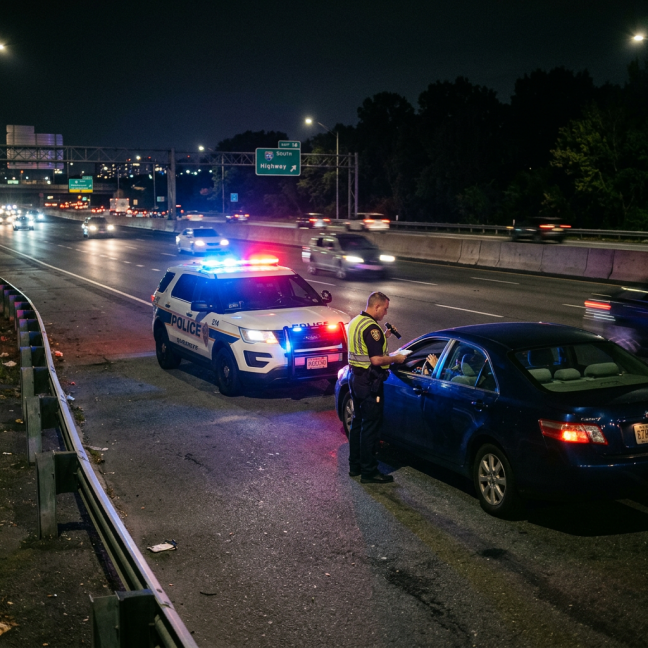
Traffic stops are one of the most common interactions people have with law enforcement, yet many drivers are unsure about what they should and should not do when they see flashing lights in their rearview mirror. Remaining calm and knowing your rights can help make the encounter safer and less stressful for everyone involved.
5 Things to Keep in Mind When You’re Pulled Over During a Traffic Stop
Seeing flashing lights behind you can instantly raise your blood pressure. Whether you believe you did something wrong or not, how you handle the next few minutes can have a significant impact on the outcome of the encounter. Here are five important things every driver should keep in mind during a traffic stop.
1. Pull Over Safely and Promptly
When an officer signals for you to stop, do not slam on your brakes or make sudden movements. Instead, activate your turn signal and look for a safe location to pull over, such as a shoulder, parking lot, or side street.
A driver who continues for a short distance to reach a safe area is often viewed differently than someone who appears to be ignoring the officer. Once stopped, place your vehicle in park, turn off the engine if appropriate, and remain inside the vehicle unless instructed otherwise.
Remember: safety comes first for both you and the officer.
2. Keep Your Hands Visible
Officers approaching a vehicle have very little information about the occupants inside. One of the easiest ways to reduce tension during a traffic stop is to keep your hands where they can be seen.
Place your hands on the steering wheel and avoid reaching into pockets, under seats, or inside compartments without first informing the officer. If you need to retrieve your driver’s license, registration, or proof of insurance, tell the officer where the documents are located before reaching for them.
A simple statement such as, “My registration is in the glove compartment. May I get it?” can help avoid misunderstandings.
3. Remain Calm and Respectful
You do not have to agree with the reason for the stop, but arguing on the roadside is rarely productive. Traffic stops are not the place to litigate your case.
Being polite and respectful does not mean you are admitting guilt. It simply helps keep the interaction professional and focused. If you believe a citation was issued improperly, there are legal avenues to challenge it later.
Maintaining a calm demeanor may also make the encounter shorter and less stressful for everyone involved.
4. Know Your Rights
Drivers have rights during traffic stops. While laws vary by state, there are several general principles that are helpful to remember.
You generally have the right to remain silent regarding questions that could incriminate you. You also have the right to decline consent to a search of your vehicle in many circumstances. If an officer asks for consent to search and you do not wish to agree, you can calmly and respectfully state, “I do not consent to any searches.”
At the same time, drivers are generally required to provide identification and other documents when lawfully requested. Understanding the distinction between cooperating with lawful requests and voluntarily giving up rights can be important.
If you are unsure about your rights in your jurisdiction, speaking with an attorney can provide clarity.
5. Document What Happened
After the stop has concluded and you are safely away from the scene, take a few minutes to document the details while they are fresh in your memory.
Consider noting:
• The date, time, and location of the stop
• The reason provided for the stop
• The officer’s name and badge number, if known
• Any witnesses present
• Any citations or warnings issued
These details can be valuable if questions arise later or if you need to consult with legal counsel regarding the incident.
Final Thoughts
Most traffic stops are routine encounters that end with little more than a warning or citation. By remaining calm, keeping your hands visible, understanding your rights, and acting respectfully, you can help ensure the interaction proceeds as smoothly as possible.
No one expects to be pulled over when they start their day, but being prepared can make all the difference when it happens.

